


UNESCO Recognises the “Latvian School Bag” Programme as an Example of Global Best Practice in Promoting Equality
Publicēts: 16.10.2025


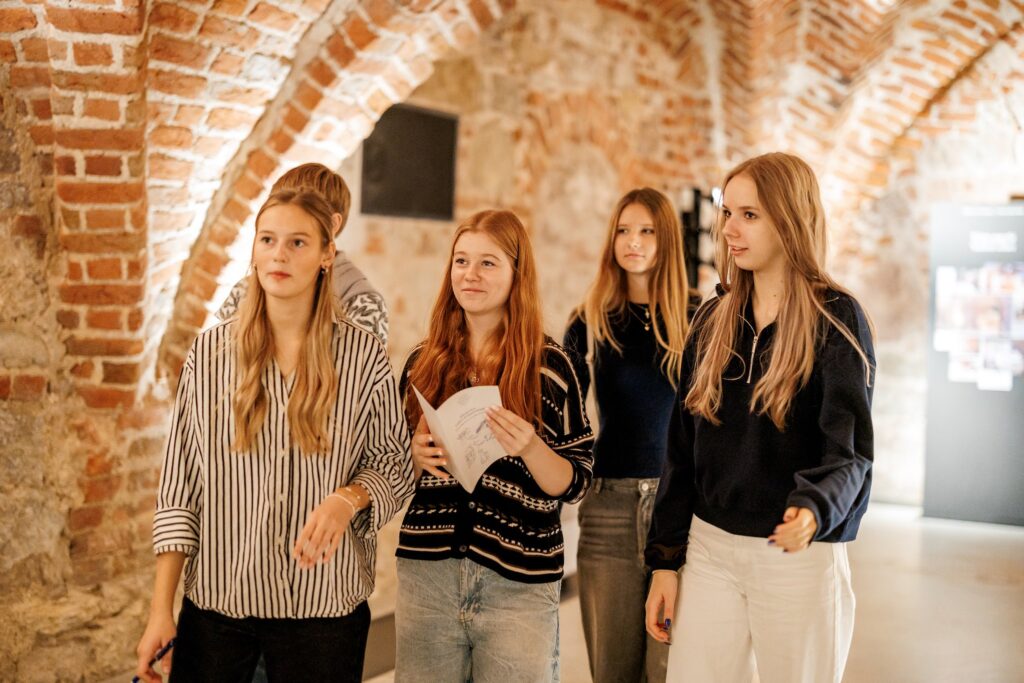
The Culture and Arts Education Programme “Latvian School Bag” (“Latvijas skolas soma”), administered by the Latvian National Centre for Culture, has been included in the publication “UNESCO Framework for Arts and Culture Education: Implementation Guidance”, alongside Estonia and Norway, as an example of good practice in promoting accessibility, inclusion, and equality in arts and culture education.
The publication is available at https://unesdoc.unesco.org/.
The Implementation Guidance opens with the following insight: “Culture and the arts are integral to inclusive, equitable and quality education. They nurture creativity, critical thinking, and respect for cultural diversity, empowering learners to engage meaningfully with the world and to build more just, sustainable and peaceful societies”.
The document highlights equal access to arts and cultural education as a core human rights and societal well-being issue. Across the world, many children and young people are still denied or restricted in such access – particularly those living in remote or socially vulnerable regions. For this reason, the “Latvian School Bag” has been recognized as an example of how cultural accessibility can be ensured at a national level as a right rather than a privilege.
“UNESCO’s recognition confirms that our approach – long-term, structured, and close cooperation between schools, artists, and cultural institutions to make culture accessible to every student – has become a benchmark at the global level,” emphasizes Aija Tūna, Head of the Culture and Arts Education Programme “Latvian School Bag”.
In addition to this newly received recognition, in recent years experts from the “Latvian School Bag” programme have actively participated in the development, translation, and implementation processes of the UNESCO Framework for Arts and Culture Education, boosting Latvia’s visibility at European and global levels. Furthermore, the experts attended a meeting of the European Network of Observatories in the Field of Arts and Cultural Education (ENO) to discuss the concept of cultural awareness and expression and its national-level implementation. They also engaged in discussions within ‘ACEnet’ – an informal network of European policymakers, civil servants, and academics in the field – focusing on how arts and culture education can foster peace and a sustainable society.


