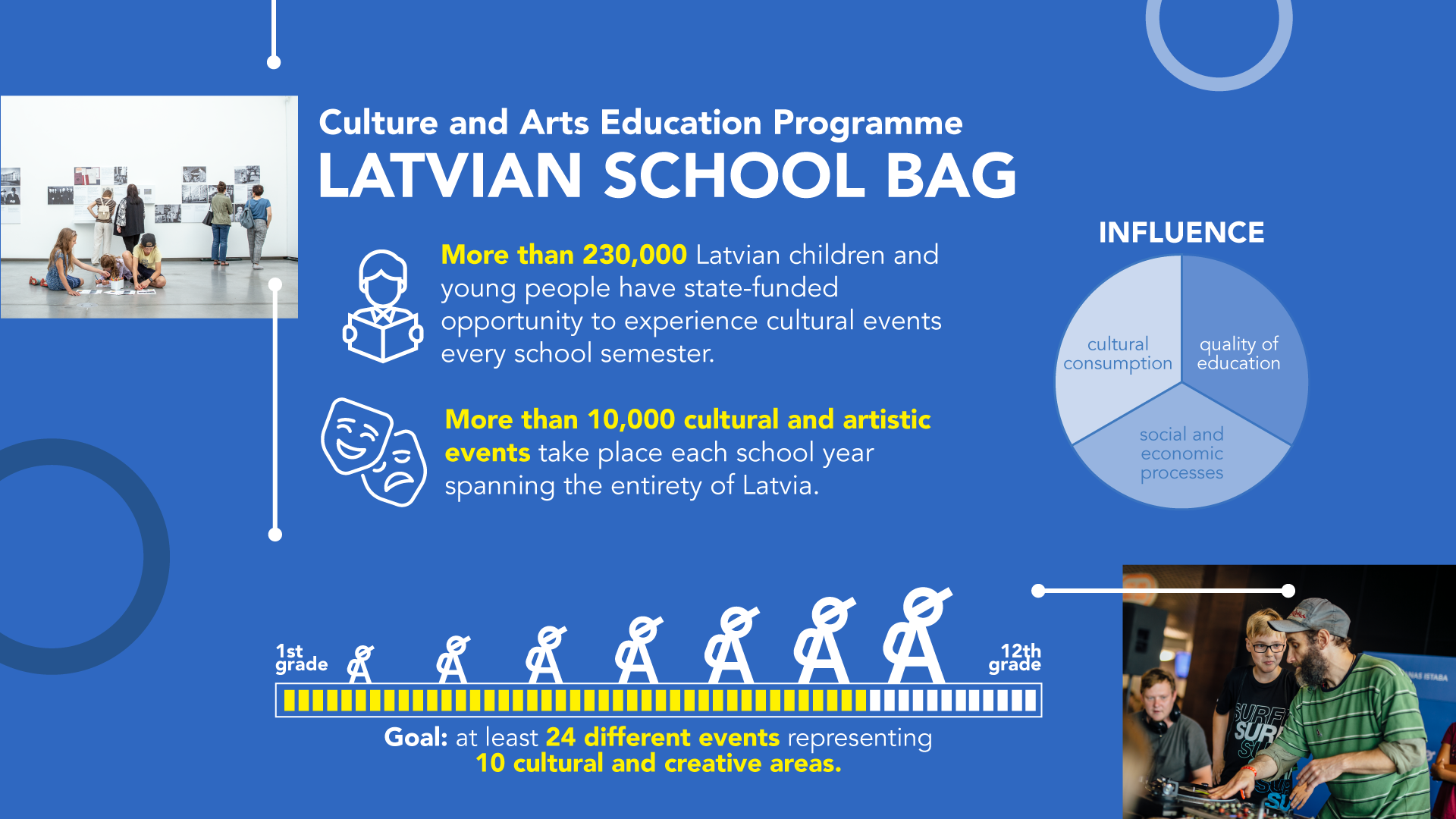
The culture and arts education programme “Latvian School Bag” (Latvijas skolas soma) provides students with a state-funded opportunity to regularly experience Latvia’s cultural values and contemporary expressions. In doing so, it fosters cultural awareness and expression competence, reduces social inequality, and strengthens pride in the country and its people.
It is a comprehensive, interdisciplinary culture and arts education programme that reaches more than 230,000 Latvian children and young people each school semester, offering them the chance to encounter culture. Launched in the 2018/2019 academic year as part of the Latvian Centenary Celebration programme, it has been administered by the Latvian National Centre for Culture since 2022.
The programme ensures that all students enrolled in full-time basic and secondary general and vocational education programmes have regular access to high-quality, professionally curated cultural events that showcase Latvia’s cultural heritage and contemporary artistic expressions. By drawing on cultural activities as an educational resource, learning becomes more meaningful and personal.
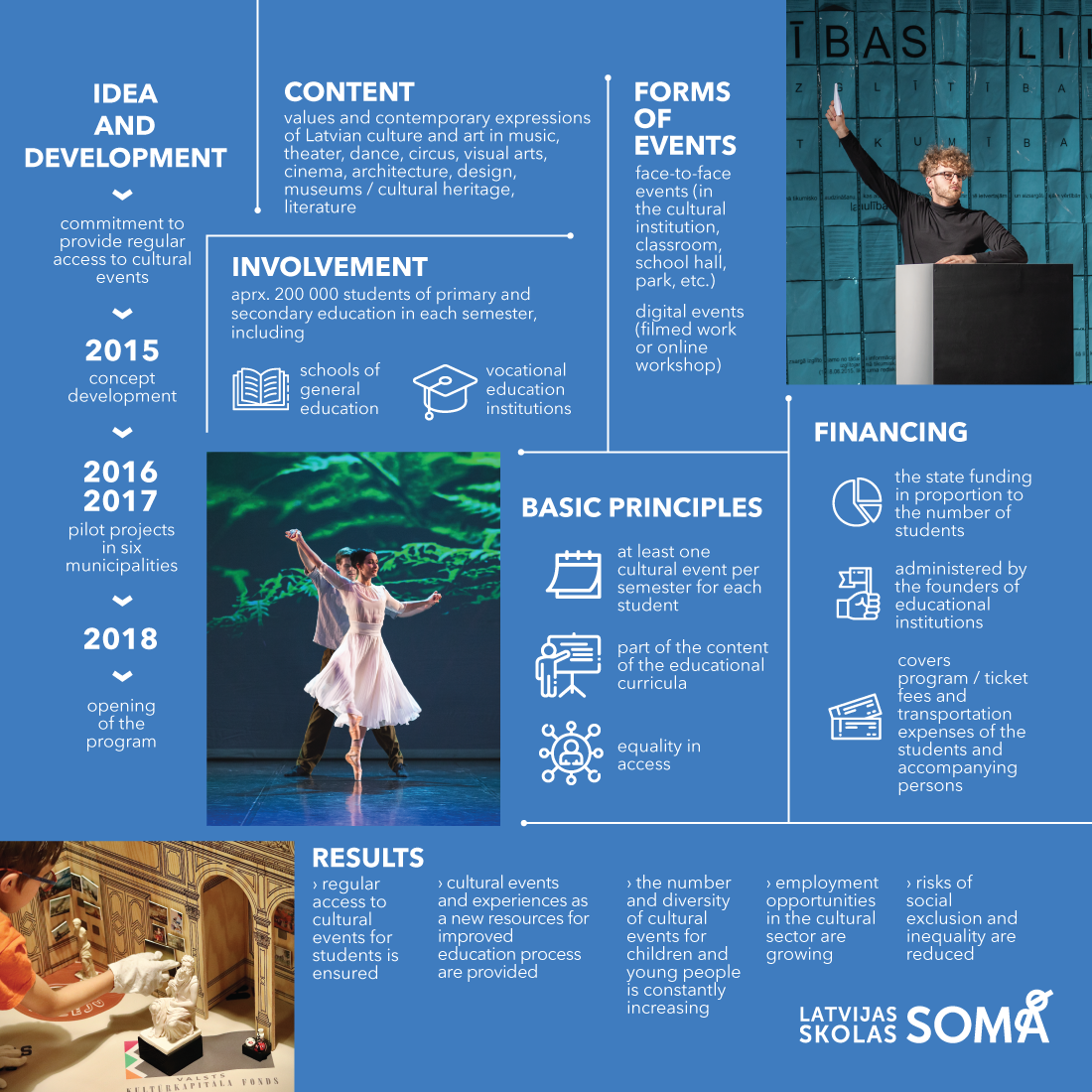
Content
Students explore ten cultural sectors: music, theatre, dance, circus, visual art, cinema, architecture, design, cultural heritage, literature and publishing. It is essential that the chosen cultural events deliver artistic enjoyment, provoke thought on personally meaningful and socially relevant issues, entertain, and simultaneously help broaden horizons and support the curriculum.
The implementation of the programme, both overall and at the educational institution level, is guided by the following core principles:
- inclusion of all students, ensuring equal access to cultural events;
- a balance between traditional cultural values and contemporary art and cultural practices;
- integration with the core curriculum and learning process to promote the achievement of national educational standards;
- collaboration between culture and education professionals.
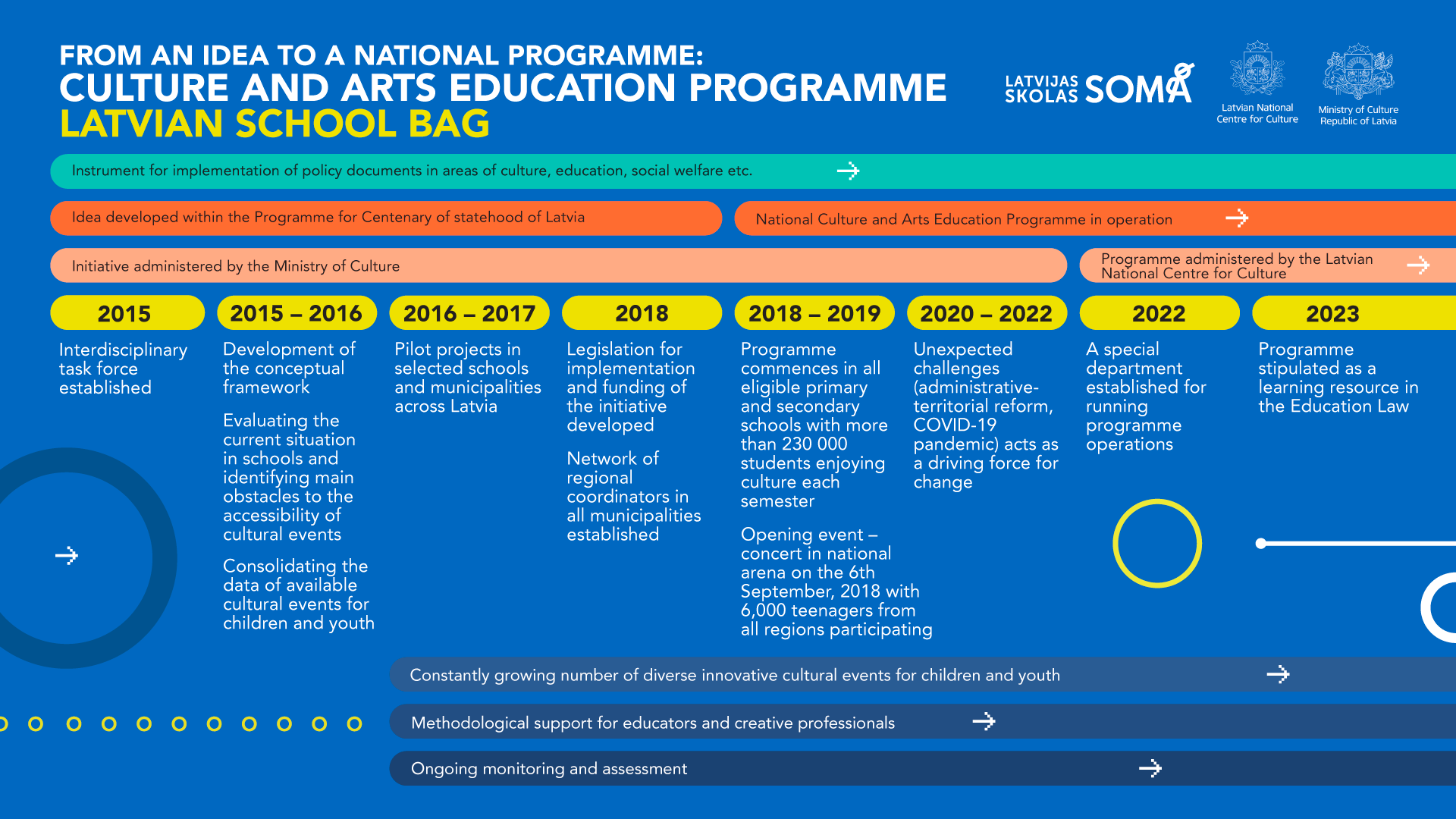
In the cultural sector, the programme:
- encourages the creation of new cultural events tailored for children and youth audiences;
- boosts employment among creative professionals;
- ensures consistent demand for cultural events, including during previously underutilised time slots;
- cultivates an experienced future audience, raising the overall level of cultural engagement and consumption.
In education, experiencing cultural events:
- facilitates curriculum learning by enhancing students’ interest and motivation to learn;
- positively impacts students’ emotional well-being and mental health;
- diversifies learning formats (e.g., serving as an alternative and/or supplement to printed books, etc.);
- fosters cooperation with families by showcasing modern learning approaches and offering access to cultural events across Latvia;
- enhances teachers’ cultural competence and promotes collaboration among educators, both individually and across the institution.